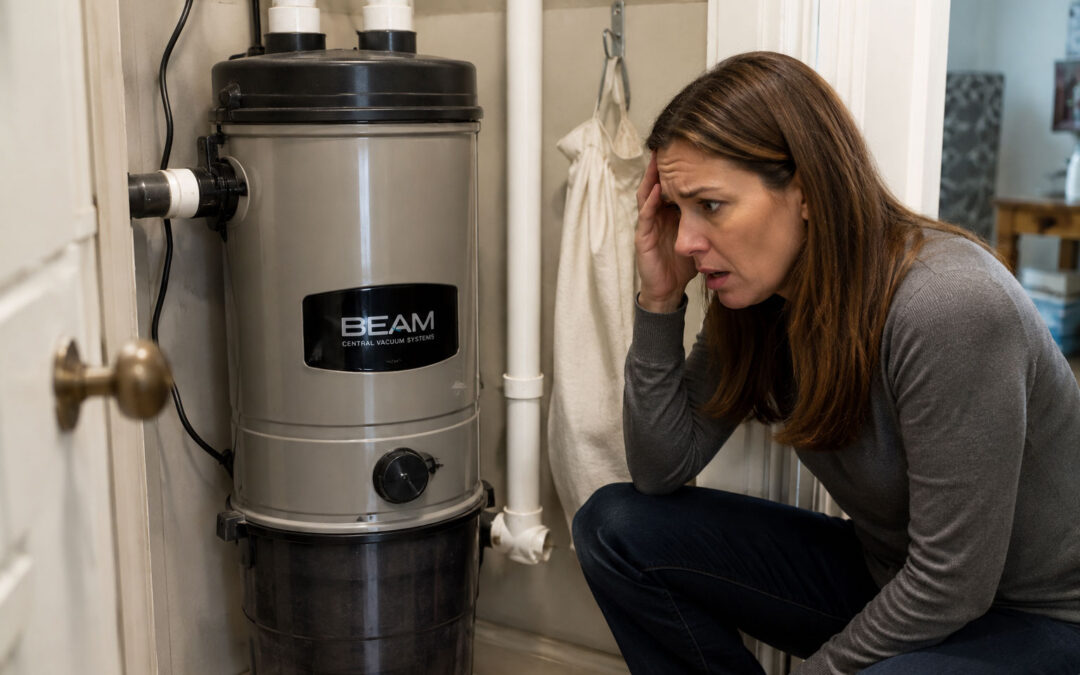
A central vacuum system should provide powerful cleaning without creating excessive noise. If your system suddenly starts roaring, grinding, squealing, or making a loud whistling sound, it’s usually a sign that something isn’t working properly. Ignoring unusual noises can allow a small issue to become a much more expensive vacuum repair.
The good news is that many loud central vacuum noises have identifiable causes. Knowing what to listen for can help you determine whether it’s a simple maintenance issue or time to schedule professional central vacuum repair.
Different Sounds Can Mean Different Problems
Not all loud noises point to the same issue. The type of sound your central vacuum is making often provides valuable clues about what’s happening inside the system.
Loud Roaring or Straining
If your central vacuum suddenly sounds much louder than normal and seems to be working harder than usual, restricted airflow is often the culprit.
Common causes include:
- A full dirt canister
- A clogged filter
- A blocked hose
- Debris lodged somewhere in the piping
When airflow is restricted, the motor has to work harder to pull air through the system. This extra strain creates a louder roaring or whirring sound and can shorten the life of the motor if left unaddressed.
Grinding or Tornado-Like Noise
A grinding, rattling, or “tornado siren” sound is often a warning that the motor itself needs attention.
Possible causes include:
- Worn motor bearings
- Debris entering the fan chamber
- Loose screws or plastic pieces striking the fan blades
Motor bearings naturally wear over time. As they begin to fail, the motor may become progressively louder before eventually stopping altogether. If you hear grinding or metal-on-metal sounds, it’s best to stop using the vacuum until it can be inspected.
High-Pitched Whistling or Screeching
A loud whistling or shrieking noise often points to an air leak or restricted airflow.
Some of the most common causes include:
- A loose dirt canister
- An automatic release valve that has opened
- A cracked hose
- Aging corrugated or wire-reinforced hoses that have begun collapsing internally
As hoses age, the interior diameter can become restricted, forcing air through a smaller opening and creating a loud, high-pitched squeal. In many cases, replacing the hose restores proper airflow and eliminates the noise.
Hissing Sounds
If your central vacuum is making a noticeable hissing sound, check for air leaks before assuming the motor is failing.
Possible sources include:
- The dirt canister not being fully latched
- Damaged gaskets
- Loose hose connections
- An automatic pressure relief valve that has opened
Even a small air leak can reduce suction while creating a surprisingly loud noise.
Don’t Ignore New Noises
One of the biggest mistakes homeowners make is continuing to use a noisy central vacuum while hoping the problem goes away.
Running a system with failing bearings, clogged airflow, or damaged fan components can lead to:
- Complete motor failure
- Higher repair costs
- Reduced suction throughout the home
- Damage to other internal components
Addressing the issue early often results in a simpler and less expensive repair.
Simple Things You Can Check First
Before scheduling service, there are a few basic maintenance items worth checking:
- Empty the dirt canister.
- Clean or replace the filter.
- Inspect the hose for clogs or damage.
- Verify that the dirt canister is securely latched.
- Check that any pressure relief or bypass valves are fully closed.
If the noise continues after these steps, the issue is likely inside the power unit or motor and should be professionally diagnosed.
Professional Central Vacuum Repair in Massachusetts
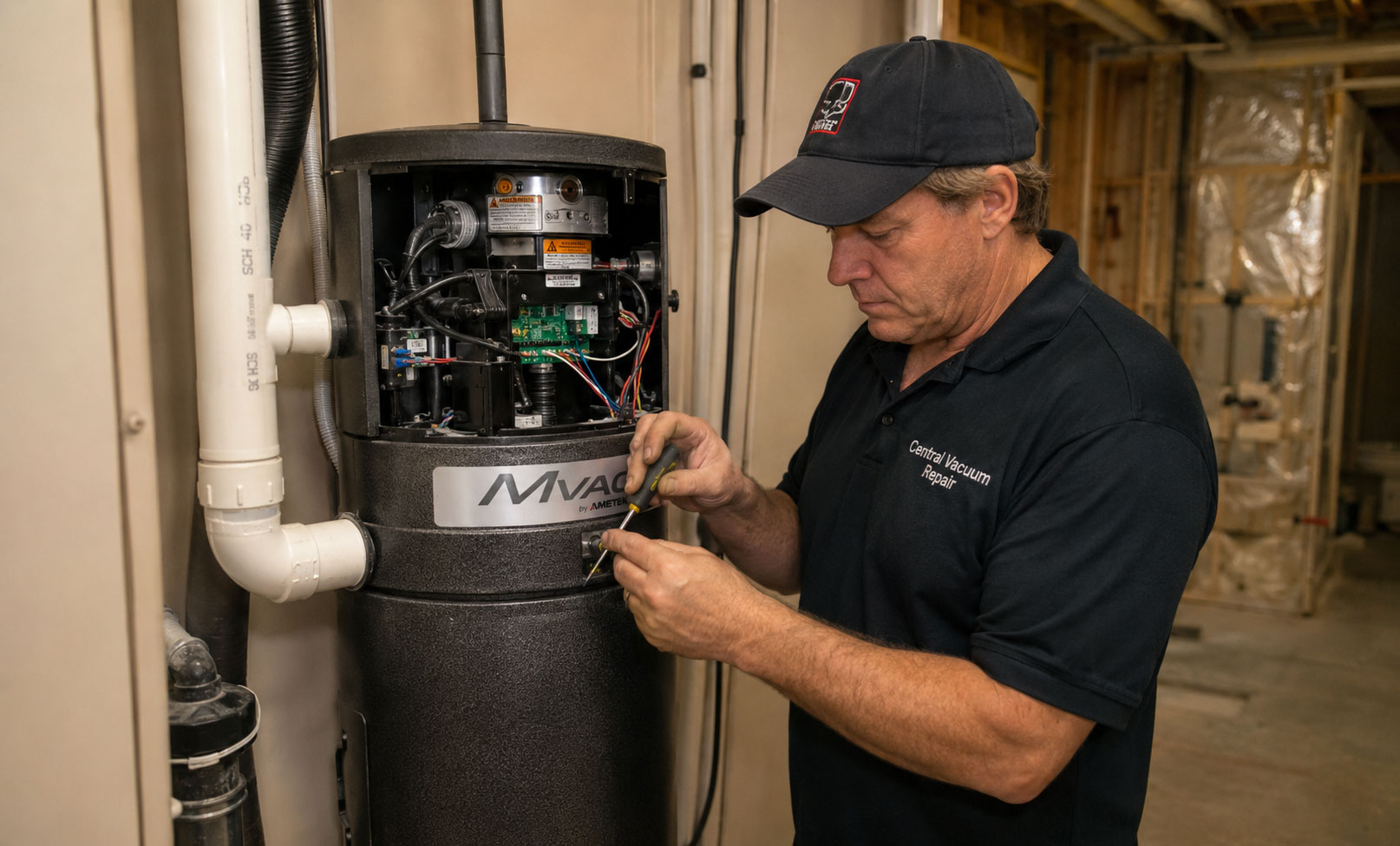
At Certified Vacuum, we’ve repaired thousands of central vacuum systems throughout Massachusetts. Whether your system has worn motor bearings, a failing motor, clogged airflow, damaged hoses, or another mechanical issue, our experienced technicians can quickly identify the source of the noise and recommend the most cost-effective repair.
We service many of the industry’s leading brands and understand the common problems that develop as central vacuum systems age. In many cases, a professional vacuum repair can restore your system to like-new performance without the cost of a complete replacement.
Schedule Your Central Vacuum Repair Today
If your central vacuum has become noticeably louder than usual, don’t wait until it stops working altogether. Strange noises are often an early warning that something needs attention.
Contact Certified Vacuum today to schedule expert central vacuum repair. We’ll diagnose the problem, explain your options, and help keep your central vacuum running quietly and efficiently for years to come.